Water Extraction in Ogden, UT
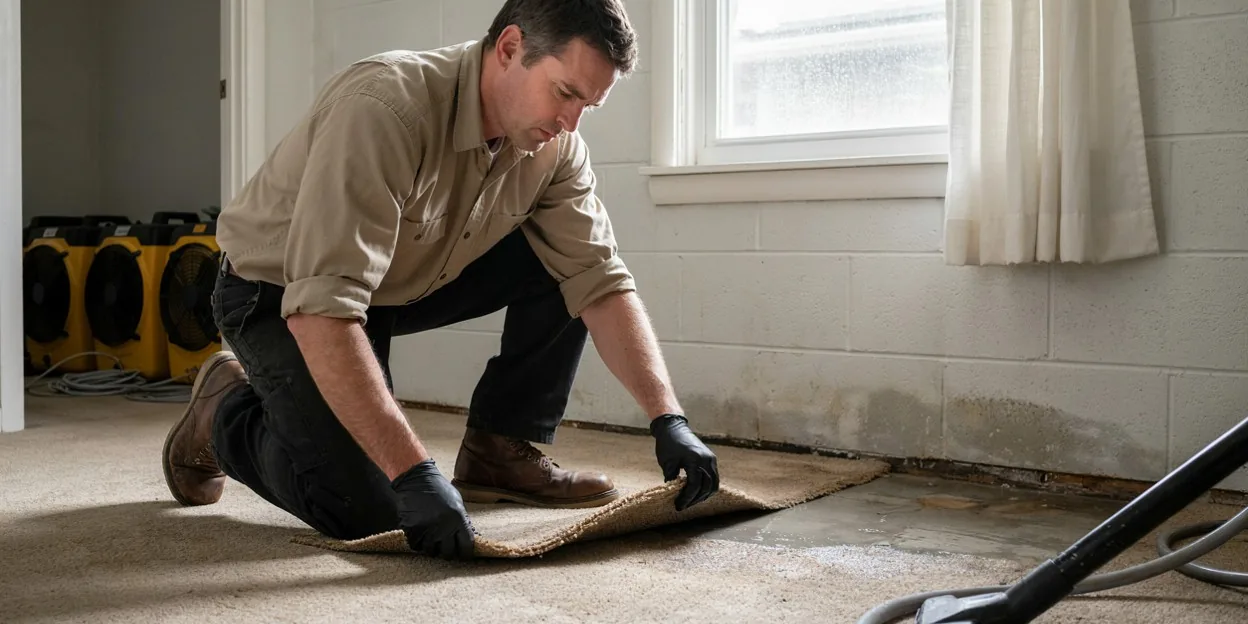
The washer supply hose split sometime after you left for work, and by the time you got home the laundry room floor was gone under two inches of water and the family room carpet downstairs had gone dark to the middle of the room. This site connects you by phone with an independent local provider who pumps out standing water in Ogden and across Weber County.
Pumping the room is the first hour, not the job
The crew starts by confirming the source is off. Then a truck-mounted or portable extractor pulls the standing water off the floor, and a weighted wand pulls what the carpet and pad are holding. On a slab or a basement floor that work goes fast. What follows is slower: a moisture meter on the lower wall, the baseboard, the door casings, and the floor of the next room over, compared against a dry reading in the same material.
Those numbers are the map. In an Ogden basement the water usually went farther than the dark patch on the carpet, because it runs under the pad to the low corner and up into the drywall along the way. Those readings decide which walls get opened and which are left alone.
Shut the valve, lift what you can, take pictures
Turn off the main valve on the basement wall by the meter, or the valve behind the washer if that is where it started. If an outlet or the furnace is wet, kill that breaker before you walk through the water. Move boxes, furniture, and anything with a wood or metal base up onto blocks or upstairs. Pull the sink cabinet doors open.
Photograph each wet room from the doorway and up close before anything leaves the house. Then call. A quick description of what you see is enough. If the flooring is soft or a ceiling is sagging, stay out of that room until the crew has looked at it.
What comes back out of a Weber County basement, and what stays
Carpet that got wet from a clean supply line is often saved when the crew reaches it inside a day or two. The pad under it almost never is. Laminate flooring that swelled at the seams comes out, and the bottom foot of drywall and the baseboard behind it usually come out too when the readings say the wall took water. Concrete floors, framing, and most subfloor dry in place.
Once the standing water is gone, structural drying is the rest of the job. If the water rose from the pit instead of coming from a pipe, sump pump failure cleanup is the page that fits.
Basements at 4,300 feet, and why the extraction goes downhill
Almost every house in Ogden has a lower level, from the stone-walled basements under the 1900s brick bungalows east of Washington Boulevard to the poured basements under the ramblers that filled South Ogden and Roy in the 1950s and 1960s. Water that starts on the main floor from a washer, a dishwasher, or a fridge line runs to the stairwell or down through the floor and pools on the lowest slab. The crew looks downstairs early even when the leak was upstairs.
The dry climate helps and hurts. Surface water evaporates fast in a Utah summer, which fools people into thinking the room is dry. The pad and the drywall are still holding it.
A supply-line failure is a sudden loss under many policies. Water that came in through the foundation or the window wells is usually handled differently, and nobody on this site can say what your policy pays. Have the crew log the readings and photos from the first visit so your adjuster gets a timeline on paper.
Making the call about a wet floor in Ogden
Have the address ready. Say where the water started, whether it is still running, which rooms are wet, and whether any of it reached the basement. Mention a finished basement, wood floors, or a ceiling stain below the leak. Call (385) 557-6268.